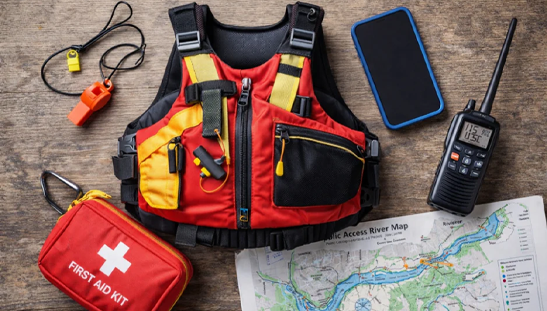
Packing Your Essential Kayak Safety Gear
Essential River Kayaking Safety for Beginners
Mastering river kayaking safety for beginners is the foundation of every successful paddling trip. Moving water behaves very differently from a calm lake or the sea. Without the right knowledge and equipment, a fun day out can quickly turn into a dangerous rescue situation.
Before you load up your boat, you must understand how to read the water, equip yourself properly, and know your limits.
You should never get in a boat without the right equipment. The most critical piece of essential kayak safety gear is a properly fitted Personal Flotation Device (PFD) or buoyancy aid. Unlike a life jacket, a PFD allows for the full range of motion needed to paddle.
Additionally, always carry:
- A Throwline: Essential for rescuing a fellow paddler from the bank.
- A Whistle: Attached securely to your PFD to signal for help.
- A Communication Device: A fully charged mobile phone in a high-quality waterproof pouch.
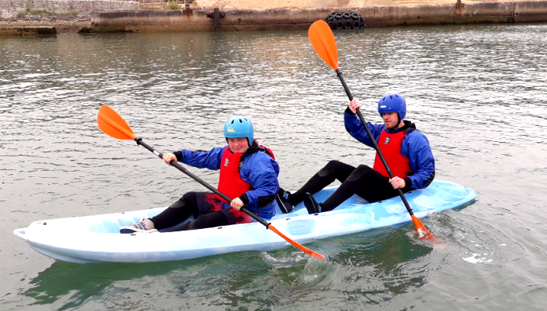


Navigating the River Grading System UK
Before choosing a route on our directory, you need to understand what the numbers mean. The river grading system uk rates the difficulty of a river from Grade 1 to Grade 6. [Source: British Canoeing]
- Grade 1: Moving water with occasional small ripples. Perfect for complete beginners.
- Grade 2: Small rapids and clear channels. Requires basic maneuvering skills.
- Grade 3: High, irregular waves and stoppers. Requires advanced boat control and safety training.
Beginners should absolutely stick to Grade 1 waters until they have received professional instruction.
Understanding Inflatable Kayak River Safety
Inflatable kayaks are hugely popular due to their portability, but inflatable kayak river safety requires specific considerations. Because they sit higher on the water and are significantly lighter than hard-shell kayaks, inflatables are highly susceptible to wind.
Never take a cheap, single-chamber inflatable onto moving river currents. If a submerged branch punctures it, you will lose all buoyancy instantly. Always use a multi-chamber, heavy-duty PVC kayak, and closely monitor the wind forecast before launching.
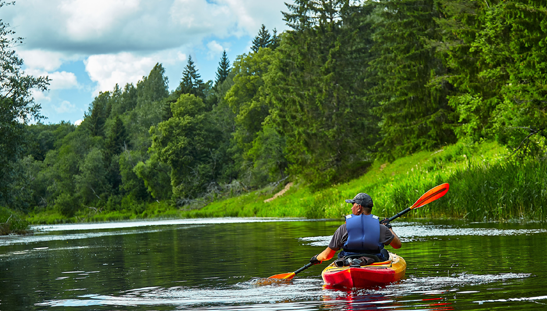
Key Takeaways
- Always wear a dedicated kayaking PFD.
- Beginners should strictly paddle on Grade 1 rivers.
- Inflatable kayaks require multi-chamber designs for safety.
Author: Andrew, UK Rivers Directory Founder
Bio: As a directory builder and outdoor advocate, Andrew focuses on combining rich geographical data with vital safety information to protect new paddlers on the UK's waterways.
Last Updated: July 27, 2026